Anabelle Colaco
16 Jun 2025, 16:20 GMT+10
ZURICH, Switzerland: In a breakthrough that could reshape the future of sustainable materials, scientists at Empa's Cellulose and Wood Materials laboratory in Zurich have developed an extraordinary biodegradable material—made from fungi.
Engineered from the living structure of fungal mycelium and its natural matrix, this new material is tear-resistant, multifunctional, fully biodegradable—and even edible.
What makes this innovation remarkable is not just its eco-friendly profile but also its performance. Traditionally, biodegradable materials made from natural polymers like cellulose, lignin, or chitin fall short in strength or flexibility. To improve them, chemical treatments are often used, sacrificing sustainability. Empa's living material elegantly sidesteps that trade-off.
The team turned to the split-gill mushroom, a common edible fungus that grows on decaying wood. Its underground root-like network, known as mycelium, is already being studied for its potential in material science. But unlike other processes that strip the mycelium of its natural elements, Empa researchers chose to use it whole—preserving not just the structural fibers (called hyphae) but also the extracellular matrix the fungus produces as it grows.
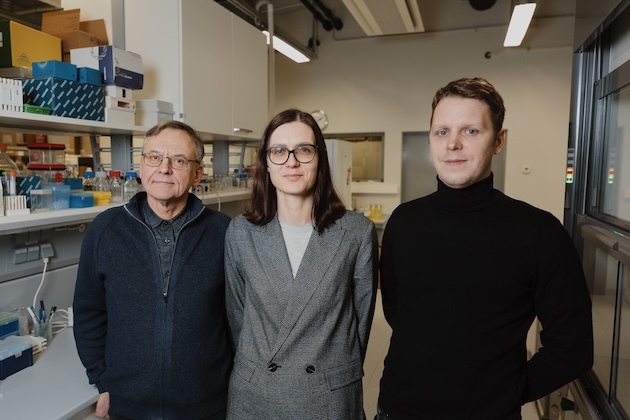
"The fungus uses this matrix to give itself structure and special properties," says Empa researcher Ashutosh Sinha. "Why shouldn't we do the same?"
That matrix contains two key substances: schizophyllan, a nanofiber-forming polysaccharide, and hydrophobin, a soap-like protein. Together, these give the material its strength and adaptability. Hydrophobins are especially good at bridging water and oil—making them ideal for creating stable emulsions, such as those found in mayonnaise or salad dressing.
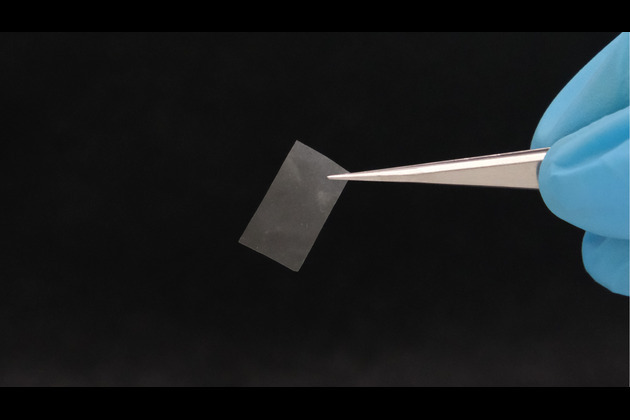
In fact, Empa researchers have already used their living material to create both a plastic-like film and a biologically stable emulsion, which may be the first of its kind to grow more stable over time. "This is probably the only emulsion that gets stronger the longer it sits," Sinha notes.
Even better, the mushroom-derived material is entirely non-toxic, edible, and biocompatible. The split-gill mushroom is already widely eaten, which opens doors to safe applications in cosmetics, food, and packaging.
In another experiment, the team produced thin, strong films from the mycelium by aligning the fibers to maximize tensile strength—combining the structure of traditional fiber processing with the unique advantages of living materials. "Our mycelium is essentially a living fiber composite," Sinha explains.
By fine-tuning the conditions under which the fungus grows, the researchers can control the material's properties—possibly even experimenting with other fungal species to produce different functional compounds. However, working with living materials isn't without its challenges.
"Biodegradable materials always react to their environment," warns Nyström. "We want to find applications where this interaction is not a hindrance but maybe even an advantage."
The mycelium's biodegradability is just one aspect—it's also a biodegrader itself, capable of decomposing wood and other plant materials.
Sinha suggests, "Instead of compostable plastic bags, it could be used to make bags that compost the organic waste themselves."
Since the fungus can also degrade plant matter, it could double as both a container and composter.
Looking ahead, the team also sees potential in sustainable electronics. The fungal material reversibly responds to humidity, making it a candidate for biodegradable moisture sensors.
It turns out that nature has already built a high-performance system. Empa's team is simply learning to work with it.
In another initiative, Nyström's team is integrating this living material with two other research projects from the Cellulose and Wood Materials laboratory: the fungal biobattery and the paper battery.
"We want to produce a compact, biodegradable battery whose electrodes consist of a living 'fungal paper,'" reveals Sinha.
Get a daily dose of Denmark Sun news through our daily email, its complimentary and keeps you fully up to date with world and business news as well.
Publish news of your business, community or sports group, personnel appointments, major event and more by submitting a news release to Denmark Sun.
More InformationVILNIUS, Lithuania – A growing body of research suggests that selectively restricting a single nutrient in our diet could have profound...
DUBLIN, Ireland: Former government minister Mary Hanafin has confirmed she will seek the Fianna Fáil nomination to contest Ireland's...
FRANKFURT, Germany: Germany has become the latest country to challenge Chinese AI firm DeepSeek over its data practices, as pressure...
DUBLIN, Ireland: Ireland's EU Commissioner Michael McGrath has defended Commission Vice President Kaja Kallas over her recent comments...
SAN FRANCISCO, California: Under pressure from European regulators, Apple has revamped its App Store policies in the EU, introducing...
BONN, Germany: Despite widespread belt-tightening across the United Nations, nearly 200 countries agreed this week to increase the...
SAN FRANCISCO, California: Under pressure from European regulators, Apple has revamped its App Store policies in the EU, introducing...
A new law in Denmark subjects 18-year-old females to the draft starting July 1 Women in Denmark are now subject to conscription,...
Israel has shut out the UN, installing its own group to hand out food to the starving population except it distributes death instead...
The IDF has shut out the UN, installing its own group to hand out food to the starving Palestinians except it distributes death instead...
A long-standing agreement on emergencies is no longer tenable since Sweden joined the US-led military bloc ...
The United States' recent tariff hikes have had detrimental effects on its economy, including slowed growth, rising costs, business...